Access control is just a fancy way of saying: the right people get into the right doors at the right time. The interesting question is how you prove who you are. There are four common answers, and they each have a sweet spot.
1. Keycard and fob systems
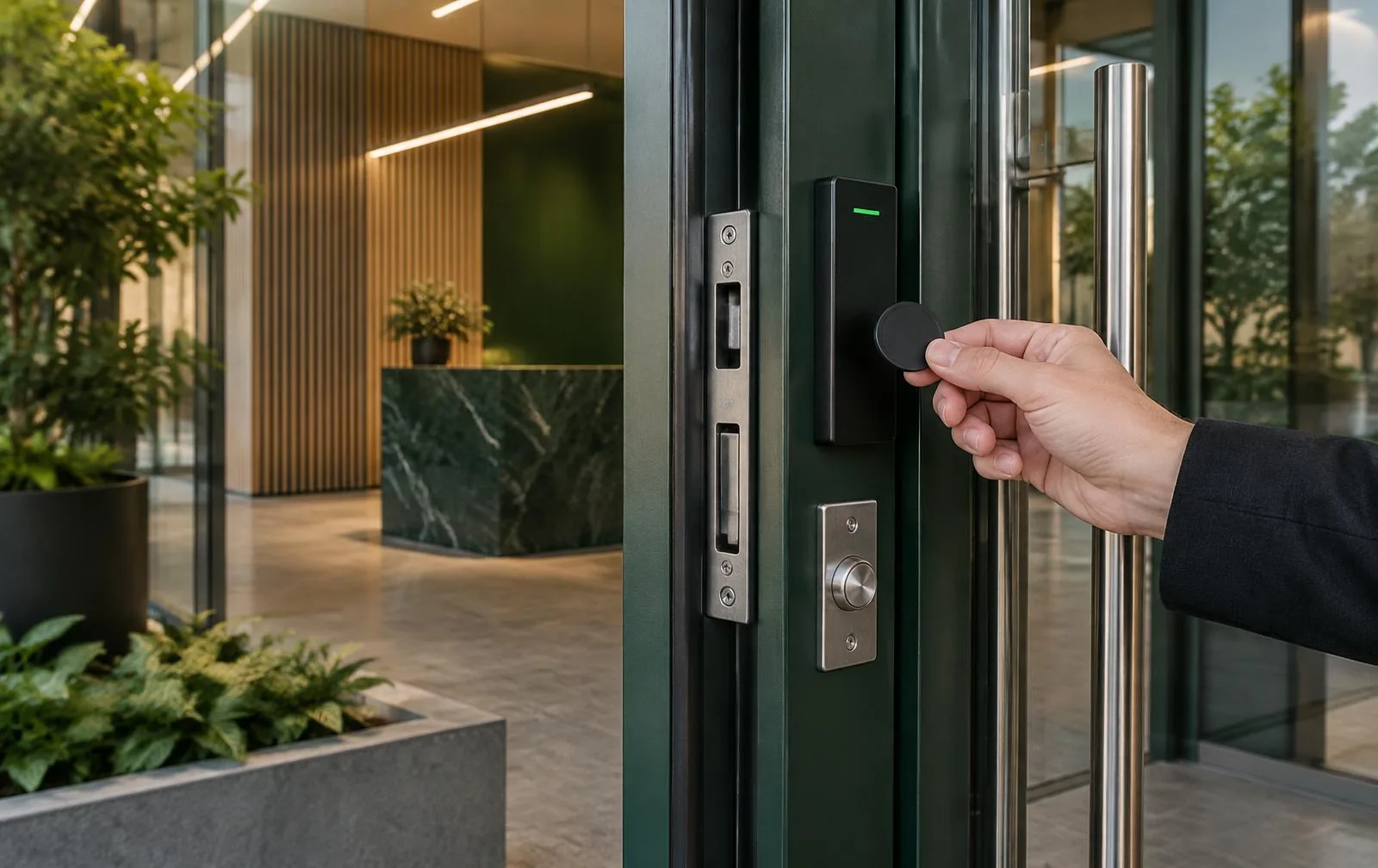
Tap a card or fob on a reader. Easy to issue to staff or residents, easy to revoke when someone leaves or loses theirs. The cards are cheap. Best for: offices, shared buildings, gyms, co-working.
2. PIN code keypads
No hardware to lose. Codes can be issued per person and rotated. Downside: codes get shared, and a worn keypad gives away the digits. Best for: low-traffic side doors, after-hours access, simple homes.
3. Biometric (fingerprint or facial recognition)
Highest assurance: you can't really share or lose a fingerprint. A bit more expensive, slightly slower under bad lighting (facial) or wet hands (fingerprint). Best for: high-security zones, server rooms, executive areas.
4. Mobile app entry
The most modern option. Issue a digital key with a time window: perfect for cleaners, contractors and short-stay rentals. Best for: small offices, gated homes, Airbnb-style properties.
Which one should you actually pick?
We almost always recommend a hybrid. Keycard or app for staff and residents (fast, easy to revoke), PIN as a backup, and biometric only on the doors that genuinely need it. That gives you convenience without paying for biometric on every door.
What every install needs
Whatever method you pick, every door needs the same supporting bits: an electric strike or maglock, a request-to-exit device for free egress, fire-egress compliance, and a power supply with battery backup. We design every install around the door, not just the reader.