
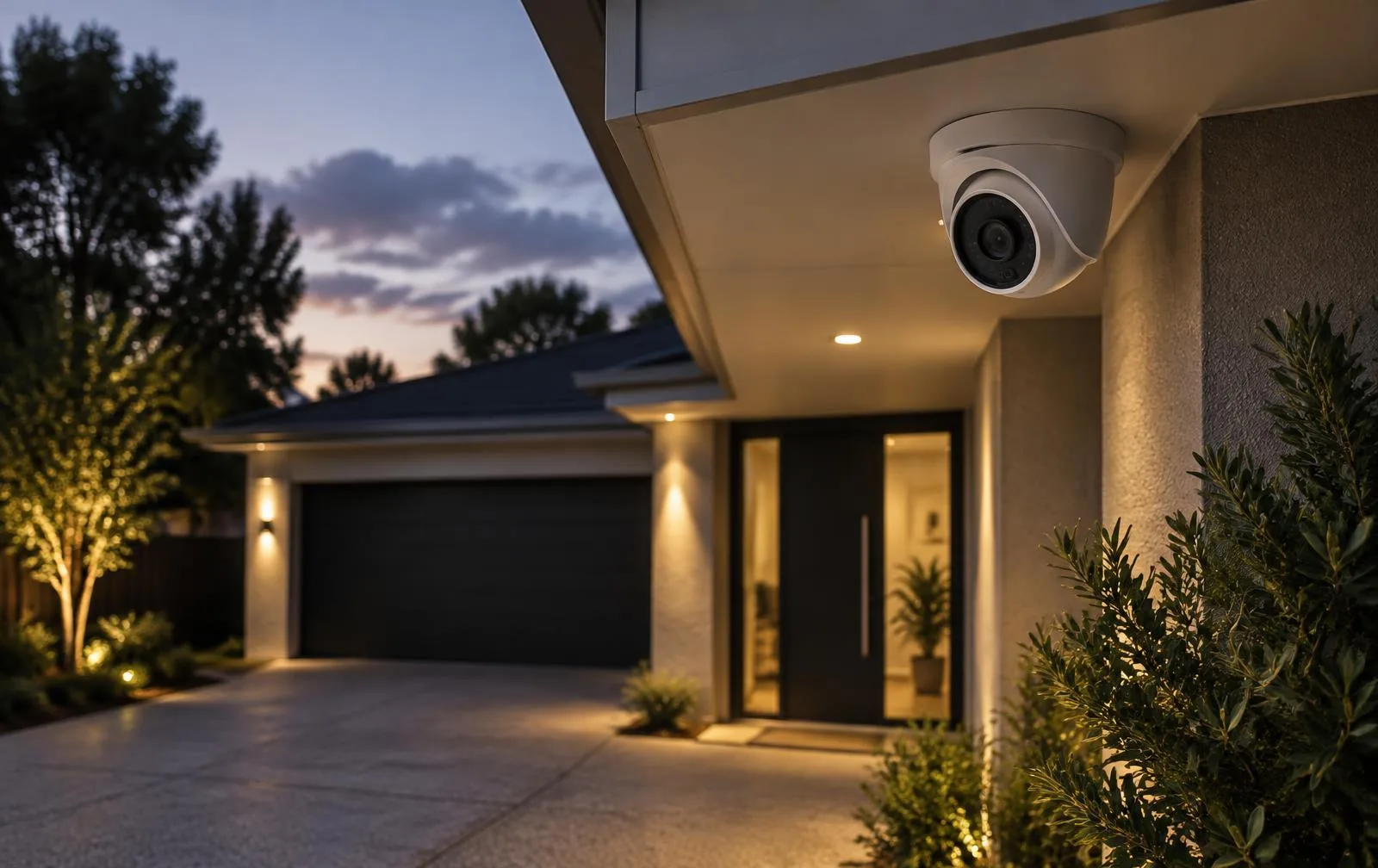
Across Melbourne's northern suburbs, the security conversation has shifted. Many households are not only worried about possessions inside the home. They are concerned about offenders entering to find car keys, vehicles being taken from driveways, tools disappearing from garages, parcels being removed from porches and businesses being targeted after hours.
This guide looks at what recent crime data and local reporting actually show, what residents say they are worried about, and what the research says about alarms, CCTV and other intrusion prevention measures. The central finding is simple: no device makes a property crime-proof, but a well-designed combination of physical security, early detection, visible deterrence, reliable alerts and usable evidence can reduce opportunity and improve the response when an incident occurs.
Burglary is not the same as robbery
The terms are often used interchangeably, but they describe different offences. Burglary generally involves entering a building as a trespasser with intent to steal, assault or damage property. Aggravated burglary includes circumstances such as a person being present or the offender carrying a weapon. Robbery involves taking property from a person using force or the threat of force.
Home alarms and CCTV are primarily designed to prevent, detect and document intrusion, burglary, theft and property damage. They may also capture evidence relating to robbery, but they cannot guarantee personal safety or stop a determined violent offender. Accurate language matters because each risk needs a different prevention and response plan.
What the latest northern Melbourne picture shows
Victoria's Crime Statistics Agency reported 483,313 criminal incidents in the year ending September 2025, a 12.3 per cent increase from the previous year. Recorded offences reached 640,860, up 10.8 per cent. These statewide figures do not mean every suburb experienced the same change, but they provide important context for the pressure residents and businesses have been feeling.
In Hume, local reporting based on Crime Statistics Agency data recorded 22,010 offences in 2024, up 20.2 per cent from 2023. Theft from motor vehicles was identified as a major driver. Victoria Police also reported that Hume had the third-highest number of stolen vehicles in the state, with a 44 per cent year-on-year increase. More than one-third of vehicles targeted were reportedly unlocked or had open windows.
Whittlesea also experienced substantial increases. Local reporting on Crime Statistics Agency figures showed offences rising from 14,976 to 18,346 in the year to June 2025, an increase of 22.5 per cent. In Merri-bek, reporting on the same official data found growth in theft from motor vehicles, motor vehicle theft and burglary, including notable increases around Brunswick and Coburg.
These figures should be read carefully. Recorded crime can be affected by reporting behaviour, policing activity and legislative changes. They also do not prove that every street is becoming less safe. They do, however, show why vehicle-linked burglary, opportunistic entry and property crime deserve practical attention across Craigieburn, Broadmeadows, Greenvale, Epping, Lalor, Mernda, South Morang, Reservoir, Preston, Coburg, Brunswick, Greensborough, Eltham and surrounding areas.
What residents and local police are reporting
The clearest recurring concern is the connection between home entry and vehicle theft. In a targeted Hume operation covering Broadmeadows and Craigieburn, police described offenders entering unlocked homes to locate keys before stealing vehicles. Twenty-six people were arrested, more than 80 charges were laid and eight stolen vehicles were recovered during the operation.
Community concern is also visible in council survey data. Hume City Council reports that 80.9 per cent of residents feel safe overall, while 66.6 per cent feel safe at home after dark. Perception is not the same as recorded offending, but that gap helps explain demand for lighting, perimeter awareness, app alerts and systems that can be checked without opening a door.
Vehicle theft and break-ins receive the strongest current evidence. Parcel theft remains a frequently discussed household concern, but recent northern-suburbs-specific data is limited. It should be described as an ongoing risk rather than a proven local spike. The same caution applies to claims about police response delays: residents value immediate alerts, but there is not enough current northern Melbourne evidence to claim a systemic local delay.
How burglars choose an easier target
Most practical prevention works by increasing effort, increasing the chance of detection, reducing the reward or prompting an earlier response. An unlocked side gate, concealed rear door, dark driveway, accessible car keys and camera blind spots all lower the effort required. A visible camera, locked gate, door contact, well-positioned light and alarm notification increase uncertainty for an offender.
This is the logic behind Crime Prevention Through Environmental Design. Natural surveillance, clear sightlines, controlled access and signs that a property is occupied and maintained work alongside electronic systems. Technology is most effective when the building itself does not provide an easy path around it.
Do CCTV cameras reduce crime?
The strongest research does not support exaggerated claims that cameras eliminate crime. Systematic reviews covering decades of CCTV evaluations find a modest overall crime-reduction effect, with stronger results for property crime and car parks than for impulsive violence or busy city-centre settings. Outcomes improve when cameras have useful coverage, images are monitored or reviewed promptly, and CCTV is combined with other measures.
Victoria Police states that CCTV can help deter people from approaching a property and help identify offenders who enter. Community Crime Prevention Victoria similarly says CCTV is most effective as part of a strategy tailored to the location and problem.
For a northern suburbs home, that means cameras should identify a person at entry points, not merely show that someone crossed the front lawn. Driveways need angles that capture people approaching vehicles. Side paths, garages and rear access require deliberate coverage. At a business, entrances, tills, stock areas, loading zones and vehicle access points need different camera views and retention settings.
Do burglar alarms prevent break-ins?
Alarm evidence is more complicated than advertising often suggests. Studies consistently favour combinations of security measures over a single device. Research comparing homes with different security arrangements also warns that audible-only alarms can be difficult to evaluate because higher-risk households are more likely to install them in the first place, and false alarms can reduce attention.
A professionally designed alarm still performs several valuable jobs. Door and window contacts can detect entry at the perimeter. Motion detectors provide a second layer inside. Internal sounders increase pressure on an intruder. External sirens and strobes alert nearby people. App or monitoring communications tell an authorised person that an event is happening, rather than relying on somebody hearing a siren.
The important distinction is between making noise and creating a response. An alarm becomes more useful when zones are correctly named, users know how to arm it, alerts reach the right people, backup power is maintained and communications continue if fixed internet is unavailable.
The most effective approach is layered
The available research and police guidance point in the same direction: combine measures so that one layer supports the next. Strong locks and disciplined key handling reduce easy entry. Lighting and visible surveillance increase perceived risk. Perimeter contacts or outdoor detection provide an early warning. Internal sensors confirm movement. CCTV helps an operator or owner understand what caused the alert. A siren, app notification or monitoring pathway prompts action. Recorded video then supports identification and investigation.
Layering also reduces dependence on a single point of failure. If an offender avoids one camera, another angle may capture the approach. If power fails, backup batteries keep the alarm active. If home internet is cut or unavailable, a properly configured mobile communicator can preserve alarm reporting. If somebody forces a door without crossing a motion detector immediately, the door contact still creates an event.
A practical intrusion prevention plan for homes
Start with behaviour and physical security before buying more technology. Lock doors, windows, garages, sheds and vehicles. Keep car keys and garage remotes away from external doors and windows. Use a key safe only if it is properly rated and installed. Trim vegetation that conceals side access, improve lighting without creating glare, and make sure house numbers are visible to emergency services.
Then design electronic protection around how the household lives. Cover likely approaches and identification points with CCTV. Protect external doors and accessible windows with contacts where practical. Use pet-tolerant detectors where needed. Separate night and away arming modes so occupants can protect the perimeter while sleeping. Give each user an individual code and remove access when it is no longer required.
- Video intercom at the pedestrian gate or front door, with mobile answering and controlled release
- Door and window reed switches for early perimeter detection
- Outdoor beams or suitable external detectors for side paths, yards or detached garages
- Low-light cameras covering faces, driveway access and vehicle approach routes
- Internal and external sirens with battery backup
- App control, event history and alerts for selected alarm zones
- 4G or dual-path alarm communications where continuity is important
- Garage-door position monitoring and alerts for doors left open
- A secure parcel location or camera-covered delivery area
A practical plan for shops, warehouses and offices
Commercial sites need controls matched to opening hours, staff access, stock value and the speed with which an offender could remove goods. A camera over a distant car park is not a substitute for identification views at doors and loading points. One alarm area for an entire warehouse may not provide enough information to verify where movement occurred.
For higher-risk retail and commercial environments, competitors commonly offer additional layers such as monitored alarms, video verification, 4G dual-path communicators, perimeter beams, roller-door contacts, access control and security fog systems. Fog rapidly obscures visibility after a confirmed intrusion and can restrict an offender's ability to locate stock. It is a specialist option requiring careful design, warning controls and confirmation that it suits the site. Product availability and monitoring compatibility should always be confirmed before specification.
- Partitioned alarms for office, warehouse, plant room and tenancy areas
- Access control with individual credentials and a clear audit trail
- Roller-door, emergency-exit and roof-hatch contacts
- Line-crossing or intrusion analytics for yards and loading zones
- Video verification for selected high-priority alarm events
- Duress buttons where staff risk assessment supports them
- 4G backup communications and maintained standby power
- Security fog for suitable high-value, rapid-loss environments
Products worth considering beyond a basic alarm and camera kit
A useful security assessment should consider the problem first and the product second. Northern Melbourne competitors sell a broad range of add-ons, but not every device is appropriate for every property. The following categories can close common gaps and can be discussed during a site assessment. Exact brands, compatibility and availability should be confirmed before quoting.
- Outdoor dual-technology detectors and active infrared beams for earlier perimeter warning
- Wired or wireless door and window contacts, including roller-door protection
- AI-assisted cameras that classify people and vehicles to reduce nuisance notifications
- Low-light, colour-at-night and number-plate-focused cameras for specific viewing conditions
- 4G dual-SIM or dual-path communicators for alarm reporting if fixed internet fails
- Video verification and professionally monitored response where a monitoring plan is available
- Smart locks and integrated access control for managed doors, staff or contractors
- Security fog systems for selected commercial or high-value environments
- GPS asset or vehicle tracking as a recovery layer, not a substitute for perimeter security
Common mistakes that reduce effectiveness
The most common failure is buying devices without a coverage plan. Doorbell video may show a visitor but miss a side entry. A high-resolution camera mounted too high may capture the top of a hood instead of a face. Motion-only recording can begin after the important action. WiFi cameras may become unreliable at the edge of coverage. An alarm that nobody arms, or whose alerts go to an old phone, provides little practical protection.
- Using CCTV as the only security layer
- Placing cameras for a wide overview instead of usable identification
- Leaving default passwords or sharing one account across every user
- Ignoring lighting, glare, moving branches and night-time reflections
- Relying on internet connectivity without checking backup communications
- Failing to test batteries, recording, timestamps, alerts and user access
- Storing car keys near the front door or leaving garages connected to the home unsecured
What effectiveness should you realistically expect?
Security should be measured by practical outcomes, not promises. A good system should reduce easy opportunities, provide earlier awareness, improve the quality of information available during an event and produce footage or event records that can be exported when needed. It should also be simple enough that occupants and staff use it consistently.
CCTV has a modest overall preventive effect in the research, with better results in certain property settings and when combined with active measures. Alarms contribute detection and response, but evidence varies by alarm type and study design. Strong physical security, lighting, access management and good habits remain essential. No ethical installer should promise that an alarm or camera will prevent every burglary, robbery or home invasion.
Choosing a system for a northern Melbourne property
The right starting point is a site assessment. A Craigieburn family home with vehicles in the driveway, a Brunswick terrace with rear-lane access, a Mernda new build, a Coburg warehouse and an Epping shopfront have different entry paths and response needs.
Active Security Australia designs alarm, CCTV, intercom, access control and network systems as one connected security solution. The assessment should identify likely approaches, blind spots, cabling paths, night-time image conditions, household or staff routines, communications resilience and how alerts will be handled. That produces a system that is active and useful, rather than a collection of disconnected devices.